
The Natural Body PillowSupport before recommendation
A body pillow is a long pillow you hug or lie against on your side. This reference reads published research and sellers' own pages. It explains what one does, which shape suits which sleeper, and where the evidence runs out.

Support, then recommendation
What a body pillow isBody pillow guides
Every body pillow guide
How do you wash a body pillow when it is too long for the washer?
Many straight body pillows are sold at 20 by 54 inches (Amazon Basics). One full-length pregnancy pillow measures 69.5 inches and weighs 5.75 pounds (Leachco), and neither it nor the 54-inch kind will lie flat in your home washer. Two things decide what you do next. One is the fill inside, and the other is what your care label allows.

What makes a pregnancy pillow organic, and what is kept out of it?
Plenty of pregnancy pillows say organic on the front. Far fewer back that up for the fill, which is the part you lean on every night. The word has to cover the fill before you can rely on it, and non toxic is a separate claim about what is kept out.

When is the right time to start using a pregnancy pillow?
Most pregnancy pillow advice tells you to start when sleep gets uncomfortable. That is a feeling, not a date. The sleep research does give a date. The clearest line is 28 weeks, when UK and Australian guidance says to go to sleep on your side. The American College of Obstetricians and Gynecologists (ACOG) points you to side sleeping from the second trimester. This page sets those dates side by side, so you can see the evidence behind each one and the pillow shape that suits each stage.
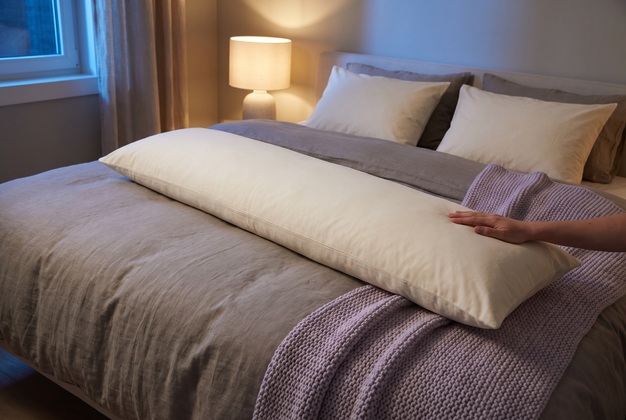
What category is a body pillow?
A body pillow is bedding, and every system that sorts products files it next to ordinary bed pillows. Google's shopping taxonomy puts it under Pillows, and US customs taxes it with other stuffed bedding. States add a third layer. Most of them require a sewn-in tag that tells you what the fill is made of. The category only gets complicated in two cases: when you buy one to treat a diagnosed condition, or when a baby is nearby.

What is inside a weighted body pillow, and how does it differ from memory foam?
On a product page, a weighted body pillow and a memory foam body pillow look much the same. They do different jobs. One gives you pressure to hug, and the other holds your legs and arms in place. This page sets the research, the sellers' specifications and our own count side by side, so the difference inside the case is plain.

How does a U-shaped body pillow differ from a long straight one?
A U-shaped body pillow wraps around both sides of the body at once, so a sleeper can turn over without dragging a pillow across the bed. That comfort costs bed space. You also pay for a lot more fill. The pregnancy claims on the packaging go further than the evidence does.
Shape and length
Which body pillow shape and length fit you and your bed?
About The Natural Body Pillow
What is a body pillow actually doing?
Filling the gap between a side-sleeper's knees and between arm and mattress, so the pelvis and shoulder stop rotating.
Mayo Clinic suggests that side sleepers with back pain put a pillow between the knees, or use a full-length body pillow if they prefer (Mayo Clinic). No trial has tested a body pillow as a product for pain. So the guides here treat it as a comfort aid (what a body pillow changes about how your back rests).
Once that is the frame, choosing a shape becomes a question of which gap needs filling.
Which shape suits which job?
Straight fills the knee gap, a U supports front and back at once, a C or J wraps one side, and a wedge supports one spot.
A shape that solves a problem you do not have is just a large object in a small bed.
Bed space is the cost. A wide U such as Regalo's runs 30 inches across (Regalo), half of a 60-inch queen (Avocado mattress size guide). The trade-offs are set out in how a U-shaped body pillow differs from a long straight one and what a pregnancy wedge holds up.
What is covered?
Form, length, fill, support, practicalities, and how a body pillow is classified.
Straight, U, C, J and wedge, and the job each shape is doing.
The common 20 by 54 inch size, and how much bed a curved shape takes.
What sellers state about fill, and how rarely they give its weight.
Side sleeping, back pain, and pregnancy from the second trimester to birth.
Covers, cooling claims, weighted fills, and washing something oversized.
Where a body pillow sits in store, customs, tax and label rules.